An AI CMO, a fractional CMO, and a full-time CMO all do the same core job: lead the marketing function of a business. But they differ wildly on cost, speed, availability, and what you actually get. This breakdown covers all three options with real numbers so you can figure out which one fits where your business is right now.
I've talked to a lot of business owners stuck at this exact decision. They know they need marketing leadership. They know winging it is costing them money. But they can't figure out which path makes sense.
Some are staring at a $250,000 salary quote for a full-time CMO and wondering if that's even realistic for a business their size.
Some are paying $8,000 a month for a fractional CMO and starting to wonder if 10 hours a week is actually enough.
Some have heard about AI CMOs and don't know if it's real or just marketing hype.
All three are valid options. But they're not interchangeable. Here's the honest breakdown.
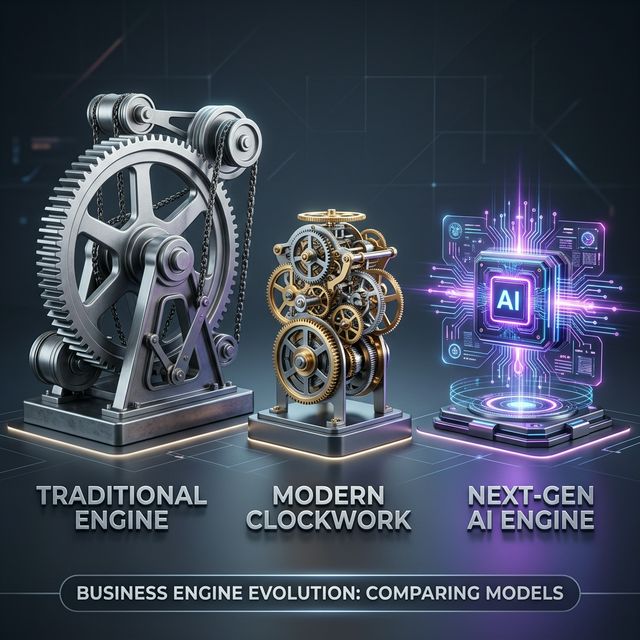
Quick Comparison: AI CMO vs Fractional CMO vs Full-Time CMO
| Full-Time CMO | Fractional CMO | AI CMO | |
|---|---|---|---|
| Annual cost | $300K–$450K+ | $60K–$180K | Under $50K |
| Onboarding time | 3–6 months | 2–4 weeks | 7 days |
| Hours available | 40+/week | 10–20/week | Always on |
| Strategy | Yes | Yes | Yes |
| Execution | Delegates to team | Sometimes | Yes |
| Learns your voice | Over months | Over weeks | Over days |
| Best fit | $20M+ with a marketing team | $2M–$20M needing strategic direction | $500K–$15M wanting strategy and execution |
This table doesn't tell the whole story. Let's go through each one.
Full-Time CMO
A full-time CMO is a C-suite executive. They run the marketing department, own the strategy, manage the team, and report to the CEO or board. In the US, that costs between $225,000 and $310,000 in base salary alone. Add benefits, bonuses, and equity, and total compensation usually runs $300,000 to $450,000 a year.
Salary data from Comparably (2026) puts the average CMO at $257,853 base. Glassdoor shows a median of $306,348. The 90th percentile sits around $455,000.
Then there's the hiring timeline. Finding a good full-time CMO takes 3–6 months. Another 3–4 months to fully onboard. During that window they're still learning your business, your market, and your team. They're not fully productive for close to a year.
When a full-time CMO makes sense
Your revenue is past $20M and growing
You have a 10+ person marketing team that needs a leader
You need someone in the room for board meetings, investor calls, or M&A conversations
Marketing is a core function of the business, not something you're still figuring out
If you're not at that stage, paying for a full-time CMO is expensive overhead for a problem you could solve with less.
The real risks
The average CMO tenure is 4.2 years. That sounds fine until you realize the first year is mostly onboarding and the last year they're already thinking about what's next. You're paying $350K+ for maybe two fully dialed-in years out of four.
And if it's a bad hire, you've lost 12–18 months and close to a million dollars before you start over.
Fractional CMO
A fractional CMO is a senior marketing executive who works with your business part-time. Typically 10–20 hours a week. They handle the strategic layer: positioning, campaign direction, team oversight, channel strategy. They usually don't do the actual execution.
Pricing ranges from $5,000 to $15,000 a month. The sweet spot is $7,000–$9,000 for a solid senior operator. That adds up to $84,000–$108,000 a year.
Much better than a full-time hire. But there are real limitations.
When a fractional CMO makes sense
You're between $2M and $20M in revenue
You have an internal team or agency that can execute, but lacks strategic direction
You need someone to build the marketing foundation before you're ready for a full-time hire
You want to test what CMO-level thinking does for your business before committing
A good fractional CMO gives you a clear picture of what's working, what to build, and what to stop doing. That clarity is worth the money if you have people who can actually execute the strategy they hand you.
The real limitations
The biggest issue isn't cost. It's capacity.
10–20 hours a week sounds reasonable. But think about what a CMO actually does. Strategy calls, team check-ins, campaign reviews, reporting, stakeholder communication, creative feedback. Those hours disappear fast.
And most fractional CMOs are working with 3–5 clients at once. Your business is one of several. When something urgent comes up elsewhere, your check-in gets pushed.
The other thing most fractional CMOs won't tell you: a lot of them haven't caught up to AI yet. You're paying $10,000 a month for someone doing manually what AI handles in 20 minutes. That's not a great trade.
AI CMO
An AI CMO is a system of AI agents installed into your business to handle the strategic and operational marketing work. It connects to your data sources. It learns your voice. It monitors performance, drafts content, plans campaigns, and gives your team action plans. Continuously.
At TTYCMO, the installation starts from $99 a month. That includes both the strategy and execution layer.
When an AI CMO makes sense
Your business is doing $500K–$15M in revenue
You're currently doing your own marketing, or you have an agency relationship that isn't working
You want both strategy and execution, not just advice
You don't have an internal marketing team to execute someone else's strategy
You need it running now, not in six months
The real limitations
An AI CMO handles about 80% of what a marketing function needs. The remaining 20% is genuinely human. Client relationships. The business insight that comes from being in the room. Real stories and case studies. High-stakes positioning decisions.
So you still need to stay involved. Feed the system updates about what's happening in your business. Review and approve content. Make the calls that require judgment, not just data.
The AI does the heavy lifting. You provide the direction and the lived experience. That's the trade.
The Honest Decision Framework
Here's how to actually think through this.
Under $2M in revenue: An AI CMO can help you test channels quickly without burning budget on a hire. But the priority at this stage is finding what actually converts before you build a marketing machine around it.
$2M–$10M in revenue: An AI CMO fits most businesses at this stage. You need consistent marketing output but can't justify a CMO salary. You want strategy plus execution. And you want it running every day, not just during weekly check-ins. If you already have a small internal team, a fractional CMO for strategic direction combined with an AI CMO for execution is a strong setup.
$10M–$20M in revenue: A fractional CMO makes more sense here, especially if you have a marketing team that needs leadership. The AI CMO layer is still valuable for execution and monitoring. Running both isn't unusual.
Past $20M: Evaluate whether you need a full-time CMO based on how central marketing is to the business. If you have a 10+ person marketing team and need someone in the room for major decisions, the full-time hire starts making sense. Not before.
What Most Business Owners Get Wrong
The biggest mistake is treating these options like they're on a linear scale. Starter, mid-tier, premium.
They're not.
A full-time CMO is an organizational function. A fractional CMO is strategic consulting. An AI CMO is a marketing system. They solve different problems.
Most business owners trying to grow past $5M don't need a human sitting in a seat 40 hours a week. They need their marketing to actually run. Consistently. With direction. With execution behind it.
That's what an AI CMO is built for.
Frequently Asked Questions
How much does a fractional CMO cost compared to a full-time CMO?
A fractional CMO typically costs $5,000–$15,000 per month, which works out to $60,000–$180,000 a year. A full-time CMO runs $225,000–$310,000 in base salary, plus benefits, bonuses, and equity that push total compensation to $300,000–$450,000 annually. A fractional engagement usually saves 40–60% compared to a full-time hire, and you get more strategic focus per dollar since the fractional isn't pulled into internal admin and office politics.
Can an AI CMO replace a fractional CMO?
For some businesses, yes. For others, running both makes sense. An AI CMO handles execution, monitoring, and consistent content output. A fractional CMO brings human judgment, stakeholder relationships, and strategic direction. If your business is under $10M and you don't have an internal team to execute a fractional's strategy, an AI CMO covers more ground at a fraction of the cost. If you're past $10M with a team that needs leadership, the combination of fractional strategy and AI execution is worth considering.
How long does it take to onboard each option?
A full-time CMO takes 3–6 months to hire and another 3–4 months to onboard fully. A fractional CMO is typically up to speed in 2–4 weeks. An AI CMO installs in 7 days and starts operating semi-autonomously within the first two weeks.
What if I want to move from an AI CMO to a full-time hire later?
The transition is cleaner than most people expect. An AI CMO builds a documented record of what's working, what your brand voice looks like, and what your marketing machine looks like in practice. When you're ready to hire a full-time CMO, they're walking into an operating system with real data, not a blank slate. Most hires prefer inheriting that kind of baseline over starting from scratch.
Is a fractional CMO worth it if they only work 10–20 hours a week?
It depends on what you actually need. If your problem is lack of strategic direction and you have a team that can execute, a fractional CMO at 10–20 hours a week can move the needle significantly. If your problem is lack of execution, a fractional CMO won't solve it. They hand you a strategy. Someone still has to run it. That's where an AI CMO fills the gap.
If you're still figuring out which option fits your business, book a strategy call and I'll walk through it with your specific numbers.